




Uncategorized
How to Measure Your Interpupillary Distance (IPD) | bchashmavala.com
Your inter-pupillary distance (PD) is the distance between your pupils, measured in millimeters. Eye doctors always measure this distance to ensure an accurate fit when they write prescriptions for eyeglasses. The average adult PD is 62 millimeters, though the normal range for most individuals is between 54 and 74 millimeters. You can measure your PD at home by yourself or with the help of a friend, or you can have it done professionally by an eye doctor.

- Measuring IPD (Interpupillary Distance) is important when fitting eyeglasses or ordering prescription eyeglasses online. IPD is the distance between the centers of your pupils and is typically measured in millimeters. Here’s how you can measure your IPD:
Method 1: With the Help of a Friend
- Find a friend: Ask someone you trust to assist you with the measurement. This method is more accurate and reliable.
- Stand in a well-lit area: Ensure you are in a well-lit room with good visibility.
- Hold a ruler: Your friend should hold a millimeter ruler or a printable PD ruler (which you can find online) horizontally against your nose bridge.
- Focus on a distant object: Look at a distant object with both eyes open. This helps your eyes stay relaxed and ensures an accurate measurement.
- Measure from the center of one pupil to the center of the other pupil: Your friend should align the ruler with the center of your right pupil and then measure to the center of your left pupil. Make sure the ruler is held straight and that it aligns with the pupils’ centers.
- Record the measurement: Read the measurement in millimeters at the point where the center of the left pupil aligns with the ruler.
Method 2: Solo Measurement (Less Accurate)
If you don’t have someone to help you, you can try this less accurate method:
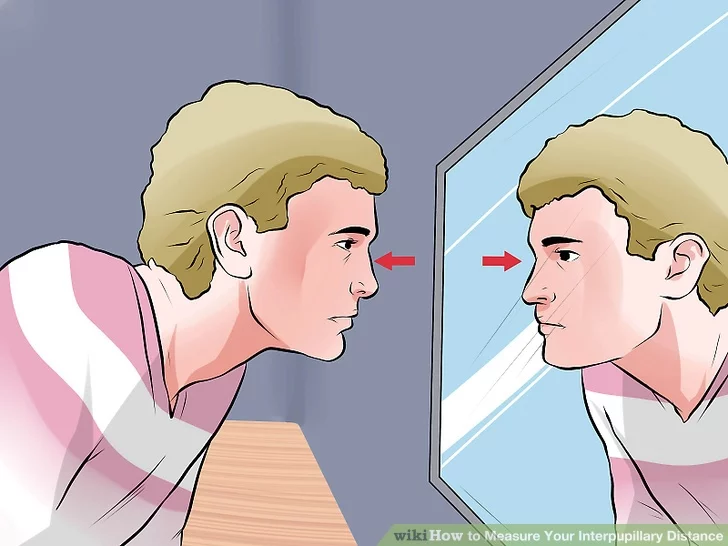
- Stand in front of a mirror: Position yourself in front of a mirror.
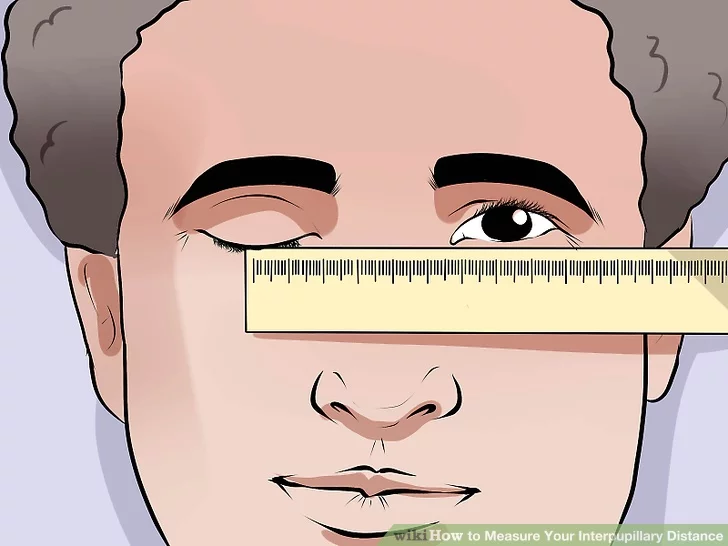
- Hold a ruler up to your face: Use a mirror to view both of your pupils while holding a millimeter ruler horizontally against your nose bridge.
- Align with one pupil: Close one eye and align the ruler with the center of the open eye’s pupil.
- Keep the ruler steady: Ensure the ruler is held straight and aligned with the center of the pupil.
- Measure from the center of the pupil to the bridge of your nose: Read the measurement in millimeters where the ruler intersects with the bridge of your nose.
- Repeat for the other eye: Open the previously closed eye and close the other one. Align the ruler with the center of the second eye’s pupil and measure again.
- Calculate the total IPD: Add the measurements for both eyes together to get your total IPD.
Method 3 : Having Your Inter-Pupillary Distance Measured By An Eye Doctor
1.Schedule an appointment with your eye doctor. Having your PD measured by an eye doctor will typically require an appointment. While you’re there, your eye doctor will most likely want to test your vision to make sure that your optical prescription is up to date. This may include testing your eye muscles, visual acuity, visual field, as well as a refraction and retinal exam.
- If you do not yet have an eye doctor, you can find one in your area by searching online or checking your local phone book.
- If you’ve had your vision tested within the last year, you shouldn’t need a new vision exam. The eye doctor who performed your vision test may also have your PD in your chart from the previous exam.

2.Have your pupil size measured. Depending on the tests you have done, your doctor may decide to check the size of your pupils using a digital pupillometer. Your eye doctor may also choose to use an ocular measurement device. Both of these handheld devices can measure the size of your pupil and the distance between your pupils.
- A pupillometer looks like a large pair of binoculars, and all you need to do is look through the lenses while your doctor takes your measurements.
- An ocular measurement device may look like a digital camera, depending on the make and model used by your doctor.

3. Leave with a prescription and your PD. The advantage of having an eye doctor measure your PD is that you will leave with both an accurate measurement and a valid prescription for your next pair of eyeglasses. Many online retailers require your PD and a prescription in order to sell you glasses, so having an up-to-date eye exam will simplify the process and ensure that you have the right prescription for your eyes.
